

With the continuous evolution of technology and changes in the modern workplace, employee well-being has become a crucial factor in the success of any organization. For startups, where agility, innovation, and high-performance culture are critical, prioritizing employee well-being is even more essential. The shift towards hybrid and remote work models has made well-being more significant than ever before. Employees now recognize a direct correlation between their well-being and company culture, emphasizing the need for well-structured well-being programs to enhance engagement, productivity, and healthy workplace relationships. This article delves into the key aspects of well-being programs and their impact on employee and organizational performance in the remote work landscape, with a particular focus on startups in Europe and CIS markets.
Why Employee Well-Being Matters for Startups
Employee well-being is no longer viewed as a mere welfare practice or an additional perk in the employment package. It is now a core component of business strategy. Startups, often characterized by long working hours, rapid scaling, and high-pressure environments, can particularly benefit from investing in well-being initiatives. Companies that prioritize both the mental and physical well-being of their employees tend to experience higher engagement levels, improved performance, and lower turnover rates. This is particularly vital in remote work environments, where isolation, burnout, and work-life imbalance are common challenges. Implementing robust well-being policies directly impacts employee engagement and productivity in remote setups, helping startups sustain their fast-paced growth without sacrificing employee satisfaction.
The Startup Landscape
In markets like Europe, startups face unique challenges related to remote work. Many countries in the region, such as Germany, the Netherlands, Estonia, and Poland, have strong remote work ecosystems with a focus on employee well-being. In many countries, startups are rapidly embracing remote and hybrid models, though cultural and regulatory factors play a role in shaping well-being policies. Startups in these regions can benefit from learning global best practices while adapting to local employee expectations and labor laws.
Here are several points to relate to:
- Enhanced productivity and performanceNumerous studies have proven that employees who regard their well-being as a priority are more engaged and productive. Employees that celebrate in Gallup’s “State of the Global Workplace” express that employees with high well-being are 17% productive and 20% more likely to stay with their employer. These numbers may derive as an understating but they surely indicate the correlation between in well-being. In remote environments, where motivation often fades because interactions are limited, invest in well-being becomes a major “make or break” factor in attaining high productivity.
- Minimized TurnoverEmployee turnover is one of the most costly challenges for startups, particularly when operating remotely where maintaining team cohesion and culture is more difficult. Recent studies indicate that well-being and flexibility are among the top reasons employees stay—or leave—a company. A 2024 Stanford University study conducted with Trip.com showed that transitioning to a hybrid model (two days remote, three days in-office) led to a 33% decrease in employee resignations. The hybrid approach not only supported employees’ work-life balance but also empowered them with autonomy—drastically increasing satisfaction levels.
- Improved Employee EngagementEmployee engagement—defined as the emotional commitment an employee has toward their organization and its goals—is one of the strongest predictors of performance and innovation. And in remote settings, engagement is harder to build, yet more critical than ever.According to Gallup’s 2025 “State of the Global Workplace” report, 31% of fully remote workers reported being “highly engaged,” which is notably higher than the 23% of hybrid or in-office workers. This finding contradicts outdated assumptions that remote employees are less committed. In reality, well-supported remote workers tend to thrive because they can shape their work around their peak productivity hours and personal needs.
- Mental Health and IsolationThe acceleration of remote work has forced a much-needed conversation about mental health. While remote work offers flexibility, it also brings prolonged isolation, blurred boundaries, and diminished human interaction—leading to increased stress and anxiety.According to a 2025 Newsweek article, 56% of remote workers go weeks without leaving their homes, and many report going days without speaking to another person. This chronic lack of social contact has significant implications: studies show that persistent loneliness can impact cognitive function, sleep, and cardiovascular health.
Additionally, a 2025 Vantage Fit report found that 39% of remote workers feel lonely, and 42% struggle to maintain work-life boundaries. Remote workers often find themselves responding to messages late at night, skipping lunch, or merging personal time with professional obligations, leading to chronic fatigue and emotional exhaustion. To address this, companies must go beyond surface-level perks and create integrated mental health strategies. These might include: - Monthly 1-on-1 check-ins with team leads trained in mental health
- Anonymous access to licensed therapists via digital platforms
- Company-wide “mental wellness” days where everyone disconnects together
- Slack channels dedicated to non-work conversations, humor, and support
The return on these investments is multifaceted: improved retention, higher morale, reduced sick leave, and a brand reputation as a company that cares.
Physical Health and Burnout
Remote work reshaped the way we move—or, more accurately, don’t move. One of the lesser-discussed consequences of remote setups is the physical stagnation it encourages: people no longer commute, walk between meeting rooms, or take breaks to socialize. Instead, they spend long, unbroken hours in front of screens, which contributes to burnout, poor posture, eye strain, and even long-term metabolic issues.
According to a 2025 Travel Perk survey, 69% of remote workers report symptoms of burnout, and 25% feel lonely due to reduced social interaction. The primary causes of burnout were identified as back-to-back virtual meetings, a lack of physical movement, and the pressure to be “always online.”
While many companies acknowledge the importance of mental health, physical well-being is still catching up in remote policy design. Yet, it’s just as critical. Poor physical health leads to decreased energy, cognitive fog, and a spike in absenteeism.
Proactive companies are tackling this with:
- Subsidized virtual fitness memberships or home gym equipment stipends
- Ergonomic consultations to optimize home workspaces
- Virtual movement challenges with team leaderboards
- Scheduled “no-meeting” walking hours during the day
- Wellness dashboards that let employees track their hydration, movement, and mood
Supporting physical health in remote setups isn’t just about productivity—it’s a direct investment in employee longevity, morale, and overall quality of life.
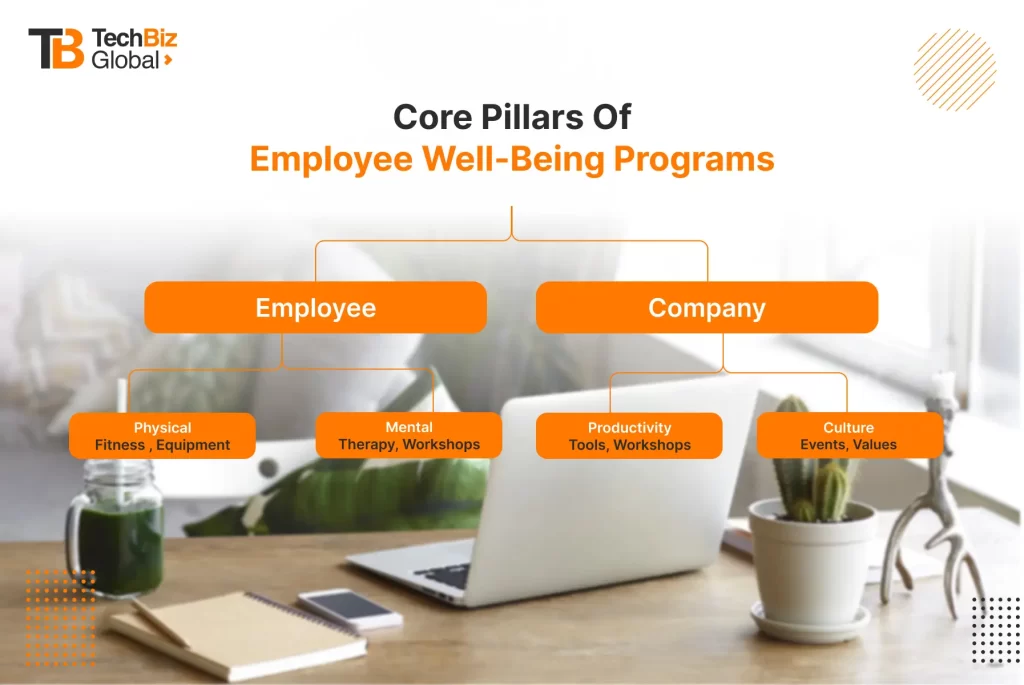
Core Pillars of Employee Well-Being Programs:
To effectively support employee well-being, organizations should focus on three core pillars: physical, mental, and emotional well-being.
- Physical Well-Being:
Remote employees often face challenges in maintaining physical health due to the absence of a structured office environment. Companies can support physical well-being by offering virtual fitness classes, ergonomic home office assessments, and wellness challenges. Encouraging regular breaks, outdoor activities, and physical exercise can also help employees stay healthy and energized, ultimately boosting their work performance.
- Mental Well-Being:
Mental health has become a top priority, especially for remote workers. The isolation and lack of face-to-face interaction can lead to anxiety and stress. Providing access to mental health resources such as virtual therapy, stress management workshops, and mindfulness programs is essential. Encouraging regular check-ins with managers and peers can also help combat feelings of loneliness and improve overall mental well-being.
How Remote Work Impacts Employee Well-Being:
While remote work offers flexibility and work-life balance, it also presents unique challenges. Without the physical presence of colleagues, remote employees may experience burnout, social isolation, and difficulty managing work-life boundaries. To address these challenges, employers must prioritize creating a virtual environment that fosters community, connection, and well-being.
It is important to address 4 key elements of successful remote work wellbeing program. And those communication, setting boundaries between the work and life, giving access to resources.
Here are many practical Examples that you can do to boost well being in remote work:
- Foster Social Connections: Organize virtual team meetings, coffee breaks, and wellness challenges to help employees feel connected.
- Promote Flexible Work Hours: Flexible work schedules allow employees to manage family and personal responsibilities alongside their professional duties.
- Encourage Mindfulness and Relaxation: Offer mindfulness programs, yoga classes, or mental health workshops to help employees manage stress.
- Provide Health and Wellness Benefits: Offering comprehensive wellness packages, including virtual gym memberships and wellness stipends, supports employee well-being.
By integrating well-being initiatives into their core business strategies, startups can build resilient, motivated, and high-performing teams while fostering sustainable growth.
How TechBiz Global Can Help
At TechBiz Global, we support startups and scale-ups by combining top-tier recruitment services with expert consulting in employee well-being and remote work strategy. We help companies hire the right talent globally through our recruitment and Employer of Record (EOR) services, ensuring seamless onboarding, compliance, and team scaling across borders.
Beyond hiring, we work closely with our clients to design and implement well-being programs tailored for remote and hybrid teams. From building strong engagement strategies to integrating wellness tools, we help foster high-performance cultures that prioritize people. Whether you’re scaling fast or aiming to improve retention and productivity, TechBiz Global ensures your team thrives—mentally, physically, and professionally.
Ready to Improve Your Team’s Well-Being?
Book a consultation with TechBiz Global today to explore customized hiring and well-being solutions for your organization.